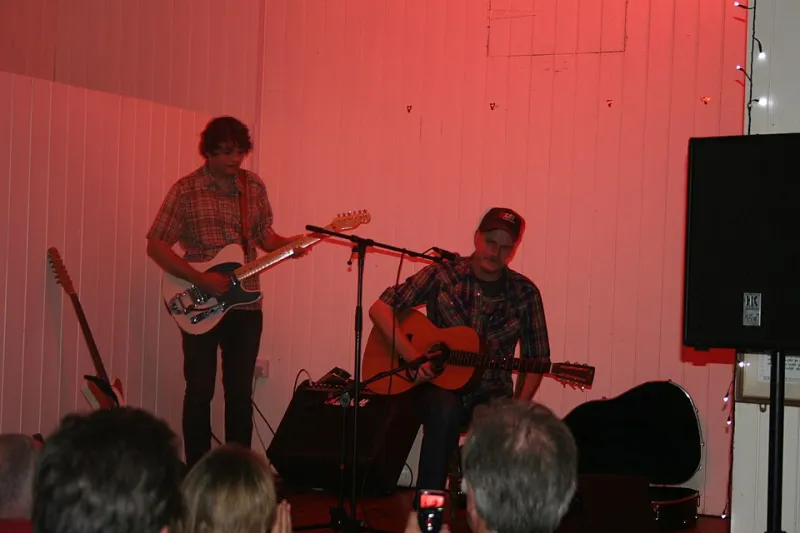
Track Seven and the Art of Hiding in Plain Sight: Inside Lewis Taylor's Sequencing Brain
Photo: Levin C. Handy (per http://hdl.loc.gov/loc.pnp/cwpbh.04326), Public domain, via Wikimedia Commons
There's a peculiar British habit of underplaying the thing you're proudest of. We do it at parties, we do it in job interviews, and — if you're Lewis Taylor — you do it with your running order.
The new record opens with a statement of intent, which sounds straightforward until you realise how much thought goes into what a statement of intent actually is. For Taylor, the first track isn't the best song. It's the door. It has to let people in without telling them what the house looks like.
The Door, The Corridor, The Room Nobody Opens
Taylor talks about albums in architectural terms. "The opener is the front door," he says, nursing a cuppa in a north London café that smells faintly of the record shop upstairs. "Track two, you're in the hallway. By track four you should be somewhere comfortable. And then there's always one room you have to go looking for."
That room, on this record, is track seven — a slow-burning, barely-there ballad that arrives exactly at the point where most artists would put their biggest swing. Instead, Taylor tucked his most radio-friendly number in at track five and let the seventh slot breathe.
"If you put the big song where everyone expects it, it becomes wallpaper," he shrugs. "Bury it and the people who find it? They'll defend it like it's theirs. Because in a way, it is."
It's a philosophy with roots. The records Taylor grew up on — the Stevie Wonder albums, the dusty soul compilations passed around Dalston in the nineties — were sequenced for vinyl, for sides, for sitting down and listening properly. Side one ended where it ended because someone decided it should. That deliberateness is a lost art in the streaming era, when a playlist can be reordered by anyone with a thumb.
Reading the Running Order Like a Map
So what does this album's map look like? Here's the track-by-track logic, as far as Taylor will explain himself:
Track 1 — the handshake. Warm, familiar chords, but with a harmonic swerve in the final eight bars that tells you this won't be a comfortable evening. "It's politeness with a trick in it. Very British."
Track 2 — the pulse. The first proper groove. Taylor's rule: never make people wait past track two for something they can nod to.
Track 3 — the confession. The lyrics get personal here, deliberately early. "Everyone's still listening at track three. By track nine you've lost the browsers."
Track 5 — the big one. The single. Placed mid-album rather than up front so it lands like a reward rather than a promise.
Track 7 — the buried one. Sparse, mostly voice and piano, recorded in one take at 3am. The song Taylor almost left off entirely — and the one early listeners keep messaging him about.
Track 10 — the long way home. A seven-minute closer that refuses to resolve until the final chord. "Endings shouldn't clap for themselves."
Why the Hidden Ones Endure
There's a pattern across Taylor's back catalogue that he's happy to acknowledge: the deep cuts outlive the singles. Ask longtime fans about their favourite and they rarely name the obvious track. They name the one that took three listens. The one that felt like a secret.
"Streaming flattened everything," Taylor says. "Every song is track one now if you want it to be. So sequencing is almost a rebellious act. It's me saying: no, this is the order I meant. Sit down. Kettle's on. We're going the long way round."
And the fans, it turns out, like being told. There's something quietly moving about an artist who still believes in the album as a journey rather than a bundle — especially a British one, especially now, when independent soul artists have to shout to be heard and Taylor has always preferred to whisper.
Track seven isn't hiding anymore, of course. It's the one everyone talks about. Which, if you think about it, was probably the plan all along. Or maybe, as Taylor says with a grin on his way out the door: "Maybe I just put it there because it flows better. Sometimes the clever reading is a happy accident."
Either way — start at track one. Do it properly. It's worth it.