The Choir You Didn't Audition For: When the Crowd Sings Louder Than the PA
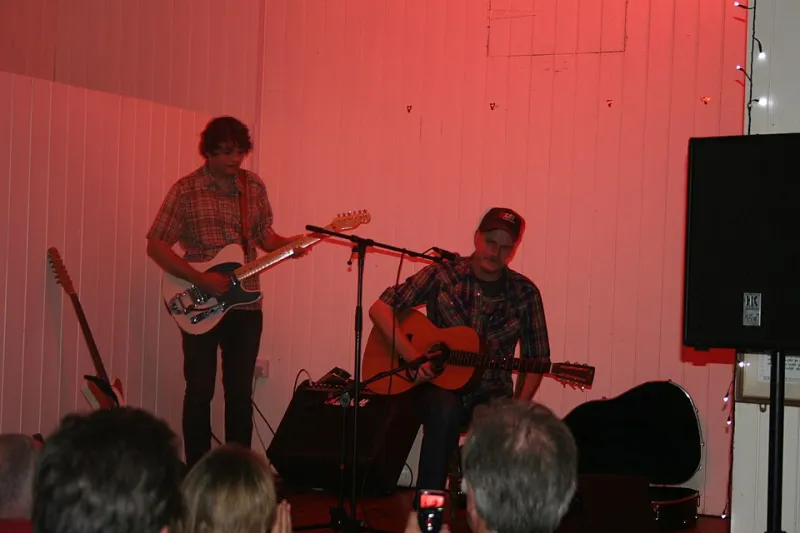
Photo: deargdoom57, CC BY 2.0, via Wikimedia Commons
There's a moment that happens at nearly every small-venue soul gig in this country, and if you've been to one, you'll recognise it instantly. The singer pulls back from the microphone — sometimes deliberately, sometimes because the monitor's gone and it's the only option — and the room keeps going. Every word. Right phrasing, right emotion, occasionally even the ad-libs. The PA falls quiet and two hundred strangers in a converted chapel in Sheffield or a railway arch in Peckham carry the chorus home.
It's the kind of thing that gets clipped and posted with captions like "you had to be there." But it's more than a viral-friendly accident. It's arguably the purest expression of what British soul actually is — and we think it deserves a proper defence.
The PA Doesn't Stand a Chance
Start with the practicalities. In a room holding 150 people, the sound bouncing off brick walls and low ceilings does strange, wonderful things. The crowd sits closer to the monitors than the singer does. When they lean in, they're not competing with the mix — they are the mix.
Ask anyone who's played these rooms and they'll tell you: some nights the audience outperforms the PA outright. Not because the gear is bad (though at a grassroots venue, let's be honest, it sometimes is), but because a crowd that's lived with a record for years sings it with a fluency no soundcheck can replicate. They've hummed it in the car, played it through a breakup, learned it on the walk to work. That muscle memory doesn't show up on a rider.
Word and Deed: What the Bookers Say
We had a natter with a venue booker who's programmed soul and R&B nights in the North West for over a decade — someone who'd rather we kept their venue out of it, because "the minute you praise the crowd, you jinx the next gig."
"People think singalongs are a singalong-song thing, like the singer points the mic and everyone plays along," they told us. "It's not like that at soul nights. Nobody invites it. The room just decides. And the rooms that decide are the rooms where people came back — third gig, fourth gig, knows the B-sides. You can't book that. You can only build it."
That word — build — kept coming up. Grassroots venues aren't just selling tickets; they're cultivating congregations. A crowd that sings isn't a crowd that's had a few too many warm pints of London Pride. It's a crowd that's invested. And investment, in the independent scene, is the whole business model.
Footage Doesn't Lie
Scroll through phone clips from the last few years of UK soul touring and a pattern emerges. The clips that travel furthest are rarely the big festival sets. They're the ones from the 250-cap rooms — a Manchester basement where the front row takes the harmony line without being asked; a Bristol night where the singer steps offstage entirely and the song doesn't wobble for a second; a Glasgow show where the crowd picks up a bridge so flawlessly the artist visibly laughs mid-verse.
There's a lovely humility in those moments. The performer isn't upstaged — they're handed something. The song belongs to the room for eight bars, and then it's given back, usually better than it arrived.
In Defence of Bad Etiquette
Now, the counterargument. Somewhere along the line, a section of gig-going Britain decided that singing along was gauche — a cinema-brained instinct that the performance is a product to be consumed in silence. Applaud between songs, thank you very much, and keep your favourite lyrics to yourself.
We'd gently suggest those people are in the wrong genre.
Soul music — the gospel-rooted, church-honed tradition this whole scene descends from — was never meant to be a spectator sport. The call-and-response is baked into the form. The congregation is the instrument. When a UK crowd picks up a chorus, they're not being rude; they're participating in a tradition older than the PA system, older than the venues, older than most of the records being sung. The singalong isn't bad etiquette. It's the closest thing the British independent scene has to a liturgy.
There's something distinctly British about it, too. We're not a demonstrative nation by default — we queue, we apologise, we keep our emotions in a locked drawer. The soul singalong is one of the few rooms where the drawer gets opened. That's why it feels so potent when it happens. That's why people film it.
Why It Matters for the Scene
Here's the practical kicker: crowds that sing are crowds that buy. Records, vinyl, the next tour's tickets, the Bandcamp release at midnight. The communal act of singing together isn't just sentiment — it's the mechanism by which a mid-sized independent artist survives. Every person who knows every word is a person who'll turn up again in eighteen months, in a slightly bigger room, still singing.
So the next time the PA drops out and the room carries the chorus — don't reach for the shush. Lean in. You're not ruining the gig. You are the gig. And frankly, you sound lovely.