Half-Asleep at the Piano: Where Lewis Taylor's Songs Actually Begin
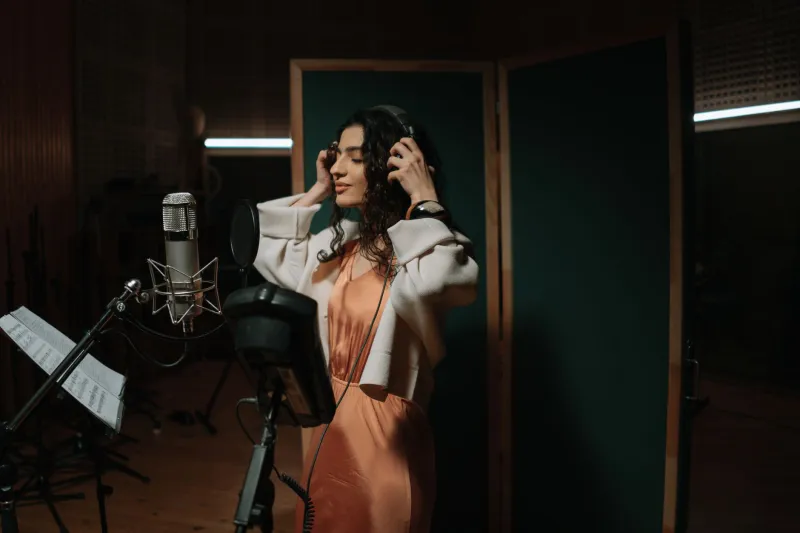
There's a voice memo on Lewis Taylor's phone that lasts exactly 41 seconds. It was recorded at 3:07am on a Tuesday in February, and by the sound of it, he was barely awake. There's a mumbled melody, a half-formed lyric about an empty bus stop, and — about halfway through — the unmistakable rustle of a duvet. That recording is the seed of a song that will appear on his next record, fully formed, strings and all.
It's also completely typical of how he works.
The Kitchen Table Studio
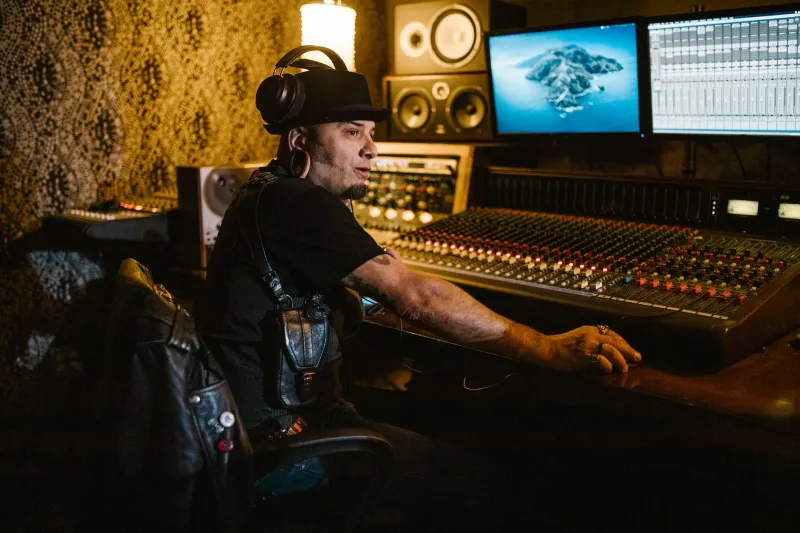
Ask most people to picture songwriting and they imagine a studio: faders, foam panels, someone behind glass nodding sagely. Taylor's reality is less romantic and more domestic. Most of his material starts at the kitchen table of his flat — a laptop, a battered MIDI keyboard with two dead keys, and whatever's nearest to hand when an idea arrives.
"The ideas don't check your diary," he says. "They turn up when you're doing the washing up, or when you wake up at some ungodly hour with a melody looping in your head. If you don't grab it there and then, it's gone. I've lost more songs to sleep than I've ever lost to anything else."
Hence the voice memos. Dozens of them, going back years, filed under names like "hum thing??" and "chords maybe". Some are ten seconds long. A few run to a couple of minutes. Most will never become anything. But the ones that keep nagging at him — the ones he finds himself humming on the Northern line a week later — get promoted to the next stage.
First Takes Are Supposed to Be Bad
The next step is the demo, and here Taylor has a rule that would horrify a certain kind of perfectionist: the first take always gets kept, no matter how rough.
"There's something in a first take you can't get back," he explains. "You don't know the song yet, so you're not performing it — you're discovering it. By take four you've started editing yourself. By take ten you're just doing an impression of the song."
He points to the demo of one of his earlier album cuts as proof. The released version is smooth, deliberate, arranged within an inch of its life. The demo — recorded in one pass at 2am, complete with a flubbed lyric and a chair creak — is the one he still plays for friends.
"People always say the same thing: 'I prefer the demo.' And I get it. The imperfection is the point. Soul music especially. You listen to the greats — the records that made me want to do this — and there are cracked notes everywhere. Voices breaking, tempos wobbling, someone coming in late. That's the humanity. Take it out and you've got a very well-made nothing."
One Song, Four Lives
To understand the process properly, it helps to follow a single track through its whole evolution. Take a song from the recent record — we'll call it by its working title, "Bus Stop", after that empty stop in the original memo.
Life one: the memo. Forty-one seconds, hummed melody, no words. Recorded in bed. Nearly deleted the next morning.
Life two: the kitchen demo. Three months later, Taylor sat down with that loop and worked out the chords on the MIDI keyboard — one of the dead keys turned out to be perfect for the bassline, which is now a feature of the final mix. The first lyric attempt was, in his words, "dreadful poetry". He kept one line anyway.
Life three: the aborted session. He booked a day in a small London studio to cut it properly with a live band, and the session fell apart. The drummer played it too straight. The tempo, which had always drifted slightly in the demo, was locked to a click and the song died on the spot. Taylor scrapped the whole day — a few hundred quid, gone — and went home. "Best money I ever wasted. It taught me the wobble was the song."
Life four: the final mix. Recorded back at the kitchen table over six weeks, mostly at night, with the tempo played by hand and allowed to breathe. Friends' backing vocals were captured on a phone in a Peckham living room. The final version keeps the flubbed line from the demo and the drift from every version before it.
Why Imperfection Isn't Optional
There's a broader point here about British soul in 2025. With a laptop and a decent mic, anyone can make something that sounds flawless. Pitch correction is free. Time alignment is a plugin. The gloss is available to everyone, which means it's worth nothing.
What can't be faked is the 3am urgency — the sense that somebody needed to sing this thing, right then, voice half gone, before the idea evaporated. That's what the voice memos capture, and it's what Taylor tries to carry through every stage of production without sanding it away.
"The memo is the most honest recording you'll ever make," he says. "Nobody performs at 3am for a phone in the dark. You just get the truth. Everything after that is trying not to lose it."
So next time you hear a track of his with a slightly rough edge — a breath where a breath shouldn't be, a note that lands a hair late — don't hear a flaw. Hear a duvet rustling, a kitchen table, and a song that nearly got away.