Thirty Minutes That Change Everything: The Quiet Business of Choosing an Opening Act
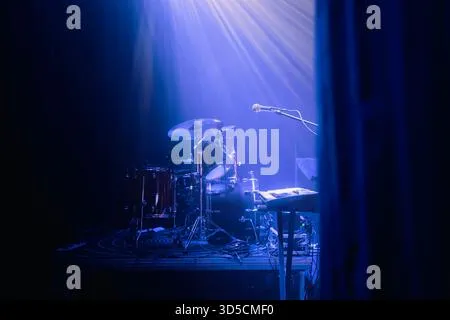
Photo: backstage musicians soundcheck empty venue stage, via l450v.alamy.com
There's a moment backstage at every gig that nobody in the audience ever sees. The headliner's people and the support act's people meet somewhere near the merch table, exchange a nod, and a career quietly changes shape.
From the crowd's perspective, an opening slot is a footnote. Half the room is still at the bar. The lights aren't right yet. But ask anyone who's ever toured the UK's independent circuit and they'll tell you: the half hour before the main act walks on can be worth more than a year of streaming playlists.
So how does the call actually get made? I sat down with Lewis Taylor ahead of his autumn run of dates — and then rang three of the young soul singers who've been handed the opportunity — to find out why a support slot is never, ever random.
It Starts With the Voice, Not the CV
The first filter, Taylor insists, is blunt and simple: can they sing it live, in a room with no net?
"I'm not listening to your production," he says, stirring a tea that's clearly gone cold. "Production can be bought. I'm listening to what happens when the laptop dies and there's just a voice and a chord. Because that's what the support slot is. You get thirty minutes, a PA that's still warming up, and an audience that didn't buy a ticket for you. If you can win that room, you can win any room."
He's equally blunt about what doesn't matter. Follower counts, he says, are "vanity maths." What he's after is vocal chemistry — whether the support's tone sits comfortably next to his own without sounding like a tribute act.
"You don't want someone doing a pale version of what you do," he explains. "You want someone who makes the night feel like a conversation. If the crowd hears two voices that belong on the same bill, the whole evening lifts."
The Mates Factor
Then there's the part nobody puts in a press release: actually liking each other.
Touring Britain's smaller venues — the greasy load-ins, the shared riders, the long M6 crawl between Birmingham and Sheffield — is a proximity exercise. You will spend more waking hours with your support act than with your family for three weeks straight.
"I've turned down technically brilliant singers because I knew we'd be at each other's throats by Manchester," Taylor admits. "And I've booked people on gut feel after one acoustic session in a kitchen in Peckham. You're choosing a travel companion, not just a voice."
There are future favours in the mix too, though he's wary of the cynicism that implies. The independent soul scene in the UK runs on reciprocity — the producer who plays keys for you tonight needs a support slot next spring, and everyone quietly keeps the ledger. "It's not corruption," he laughs. "It's how a scene without major label money stays alive. You scratch backs, but only if the music's there first."
Three Who Got the Call
Amara Bello opened the Manchester date of Taylor's last tour, four days after finishing a residency at a Dalston wine bar. "I'd played to eleven people and a dog the week before," she says. "Then suddenly I'm soundchecking at a sold-out venue. The slot didn't make me a better writer overnight, but it gave me a mailing list of eight hundred people who'd actually seen me sing. You can't buy that."
Joe Ferriday, a keyboardist-singer from Leeds, got the call through a mutual friend who'd played him a rough demo. "Lewis rang me directly. No manager, no email chain. Just rang. I thought it was a wind-up." Ferriday's EP, released three months after the tour, charted on the independent soul listings — a first for him.
Nia Okafor is the newest name in the frame, confirmed for the upcoming Bristol and London dates. She describes the audition process, such as it was, as "one afternoon, one piano, one honest conversation about Stevie Wonder." Her advice to artists hoping for a similar break? "Play everywhere. Someone is always watching from the back of the room, even when it feels like nobody is."
Why It Matters
The economics of UK independent music in 2025 are unforgiving — streaming fractions of a penny, venue closures on the local news every month. Against that backdrop, the humble support slot is one of the last genuinely meritocratic ladders in the industry. No algorithm, no gatekeeper, no budget required. Just a voice, a room, and someone further up the ladder willing to reach down.
"Every artist I admire got a hand at some point," Taylor says, finally finishing the cold tea. "Thirty minutes on a stage. That's all it takes to change someone's maths. So you'd better choose well."
The autumn tour kicks off next month — check the dates page for tickets, and do the support acts a favour: get there early.