The Demo Circle: Six People Who Hear It Before You Do

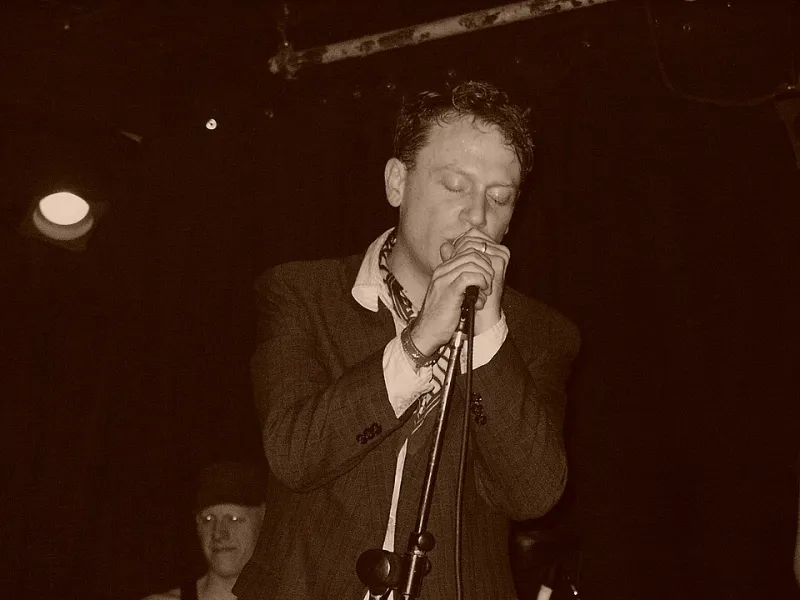
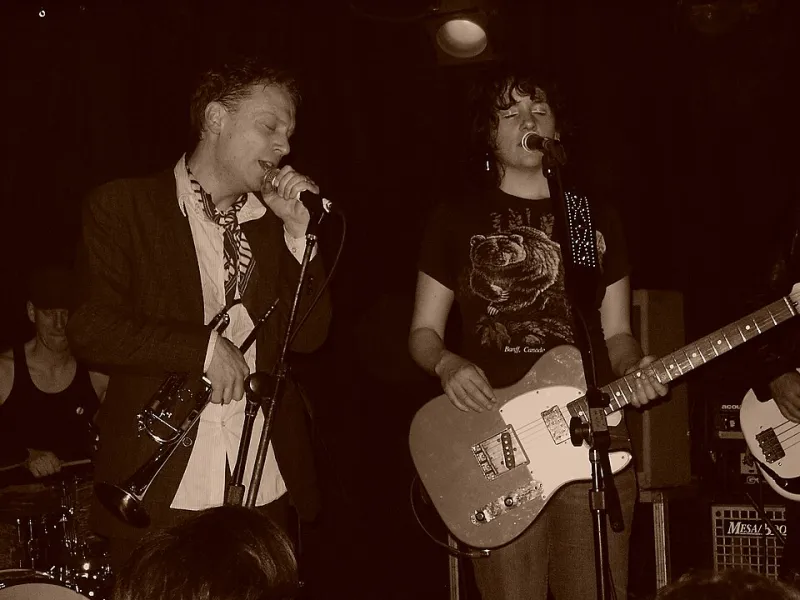
Photo: user:AngMoKio, CC BY-SA 2.5, via Wikimedia Commons
There's a moment every songwriter knows. The laptop's still warm, the last take is printed, and the file is sitting there — finished, or close enough. The question that follows isn't 'who releases this?' It's 'who hears it first?'
For an artist signed to a major, that question has an institutional answer: an A&R department, a plugging team, a spreadsheet somewhere in Kensington. For Lewis Taylor, and for most of the UK's independent soul scene, the answer is a text message thread. Six, maybe seven names. People who've earned the right to hear a song before it's a song.
The First Listener Isn't a Professional
Ask Lewis who gets the early demos and he'll laugh before answering, because the list sounds nothing like a music industry org chart.
There's his longtime live sound engineer — the man who has heard every arrangement fall apart on stage and knows, better than anyone, whether a song can survive contact with a real room. There's a friend from the Dalston days, someone who was buying gig tickets back when the crowd barely outnumbered the band. There's his partner, who has the unenviable job of hearing the same chorus forty times through a bedroom wall. And, famously, there's his former landlord.
Yes, the landlord. A man who spent years hearing muffled soul through the floorboards of a Hackney terraces and once knocked on the door mid-demo to ask, genuinely, what the chord change was. He's been on the list ever since. 'He doesn't know anything about music theory,' Lewis says. 'That's exactly the point. If he goes quiet during the second verse, I've got a problem.'
That's the philosophy in miniature: the demo circle isn't a panel of experts. It's a panel of honest people.
Replacing A&R With a Kettle and a Text Message
The traditional gatekeeping role — someone paid to say 'this isn't good enough yet' — hasn't disappeared from British music. It's just been privatised, in the loosest possible sense. Independent artists now assemble their own feedback networks from whoever they trust, and the results are often better than anything a label could provide.
A good demo listener does three things. They tell you when a song is too long. They tell you when a lyric doesn't land. And crucially, they tell you nothing at all when a song works — they just play it again.
The engineer on the list brings a different kind of value. He's not listening for hooks; he's listening for mix problems, for a bassline that'll disappear on a phone speaker, for a vocal take that'll crack under festival compression. It's a technical gut check that used to be someone's salaried job.
And the early fans — the ones who've been there since the basement gigs — provide something no professional can: continuity. They remember what the old songs sounded like. When they say a new track feels like a natural step, or a strange detour, they're reading the whole arc of a career, not just one file.
Why the Gate Matters
There's a temptation, in the streaming era, to release everything immediately. The barriers are gone; the upload button is right there. But talking to artists across the UK soul scene — from Peckham to Glasgow — a consistent pattern emerges: the ones with longevity all have a version of the demo circle.
The gap between finishing a song and releasing it is where the music becomes itself. A track played for six trusted people gets tested against real attention, real faces, real silences. By the time it reaches the public, it's already survived something. You can hear the difference. Songs that skip this stage often sound like they're still asking permission; songs that pass through the circle arrive sounding certain.
For Lewis, the process is also a quiet act of gratitude. The people on that list are the same ones loading gear after a show, or front of house on a wet Tuesday in Sheffield, or simply still listening after fifteen years. Sharing a demo before it's finished is a way of saying: this exists because of you.
The Last Name on the List Is Yours
The circle is small, but it isn't closed — it's just sequential. Every demo eventually widens its orbit: soundcheck playbacks, a surprise new song at a gig, then the release proper. The six people hear it first; everyone else hears it better.
So next time a new Lewis Taylor track lands, consider what it's already been through — a kitchen in Dalston, a soundcheck in Manchester, a landlord's untrained but unerring ear. It got to you the slow way. That's usually how the good ones travel.