The Setlist Is a Living Thing: How Lewis Taylor's Band Rebuilds the Show Every Night
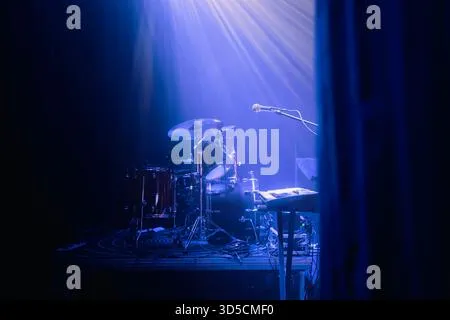
Photo: band soundcheck empty venue stage setlist, via theproaudiofiles.com
There's a moment, about forty minutes before doors at any venue on the tour schedule, when the band gathers round a beer crate near the mixing desk and someone says the words: 'Right — what are we doing tonight?'
That's when the setlist stops being a document and becomes a negotiation.
The Paper Is a Suggestion
Fans who grab a setlist off the stage at the end of the night assume it was written in stone weeks ago, printed somewhere in a management office, laminated for the road. In truth, the version taped to the floor at Lewis's feet is usually the third or fourth draft of the day, scribbled on and crossed out during soundcheck.
'The paper's more of a mood board than an order of service,' Lewis says. 'By the second song, half of it's irrelevant.'
There are anchors, though. A handful of songs that have survived every tour, every lineup change, every ill-advised experiment with a new intro. These are the load-bearing walls of the show — the ones the crowd has effectively claimed as their own. Lewis is philosophical about it: 'You write a song in your bedroom and then two thousand people decide what it means. At some point you stop arguing.'
Reading the Room (and the Postcode)
The interesting part is how much the room itself dictates the running order. The band keeps loose mental notes from previous visits, and those notes matter.
Up north, in the bigger standing rooms — Manchester, Glasgow, Leeds — the set skews earlier and punchier. Slow-burners that kill in a seated London theatre can evaporate in a room where people are three pints deep and talking over the ballads. 'There's a track that opens the album that we played first for years,' the band's MD explains. 'Took us about four tours to admit it works better at position six, once people have settled.'
Down in the smaller venues — the Guildfords, the Macclesfields — the opposite applies. Rooms where you can hear a pint glass settle from twenty feet away reward the quiet material, the unguarded stuff that would drown in a bigger space. Those shows often feature the deepest cuts, the ones that haven't been aired since the second album.
The Songs That Never Make It
Every artist has them: the songs the crowd demands that the band quietly dreads. For Lewis, it's a well-loved early single that he's grown out of like an old coat.
'I understand why people want it. I do. But I've sung it roughly nine hundred times and it says nothing to me about where I am now.' The compromise, on good nights, is a deconstructed version — same melody, completely different bones — which either thrills the die-hards or mildly annoys everyone else. 'Fifty-fifty split, honestly. But at least I'm interested while I'm doing it.'
There's also the reverse problem: the deep cut the band adores that clears the room. Every tour has one attempt to sneak it back in. Every tour, it gets quietly dropped again by the second week.
The Encore Isn't Planned Either
Perhaps the biggest myth is the encore. The band leaving the stage 'spontaneously' is, of course, theatre — but which song comes back out with them is genuinely undecided until about ten minutes prior, depending on curfew, crowd noise, and how the drummer's hands are holding up.
'If the room's been with us all night, we'll take a risk,' Lewis says. 'If we've been fighting them since song two, we play the sure thing. Nobody goes home unhappy, and nobody goes home surprised.'
Which is the whole tension of a setlist, really: the push and pull between the night the band wants to play and the night the audience bought tickets for. The best shows, everyone agrees, are the ones where those two nights turn out to be the same one.
Catch the full list of UK tour dates and ticket links over on the live page — and if you hear a song you weren't expecting, know that someone in the band fought for it that afternoon.