Stevie, Sunday Schools and Dalston Basements: Five Tracks That Built Lewis Taylor's Sound
Some artists you can hear their influences coming a mile off. Lewis Taylor is trickier. His music folds gospel warmth, psychedelia, soul and jazz into something that feels entirely his — but press play with your ears properly open and the family tree starts to show. Here are five songs that, in our view, shaped the sound fans fell in love with.
1. Stevie Wonder — "As"
Start with the obvious, because the obvious is true. The arrangement on Taylor's early material — the stacked harmonies, the chord changes that go somewhere unexpected just when you've settled, the clavinet-driven funk that never forgets the melody — owes an unmistakable debt to Stevie's 1976 golden period. What Taylor took from Songs in the Key of Life wasn't just the chords, though. It was the ambition: the idea that a British kid could make music with that much harmonic nerve and still make it sing. Listen to the middle-eight of almost any Taylor track and you'll hear Stevie's fingerprints in the modulation.
2. Donny Hathaway — "A Song for You"
If Wonder taught Taylor the arrangements, Donny Hathaway taught him the restraint. Hathaway's live recordings are masterclasses in dynamic control — the way he could hold a room with a whisper after a full-throated belt. Taylor's vocal phrasing, particularly his willingness to drop to near-speakership at an emotional peak rather than push harder, is pure Hathaway school. Gospel-trained singers often over-sing; the Hathaway lineage is knowing exactly when not to.
3. The gospel 45s — Marvin Gaye and the church
Taylor's upbringing in the church left a permanent mark, and you can trace it through the call-and-response structures and the harmonic foundations of his balladry. But the specific touchstone is the smooth, secular gospel-soul of early Marvin Gaye — records where sacred chord vocabulary was repurposed for heartbreak. The minor-key turnarounds, the organ pads underneath everything, the sense that a love song could double as a prayer: that DNA runs through Taylor's slowest, dustiest material like a watermark.
4. Funkadelic — "Maggot Brain"
Here's the curveball. Taylor's rockier, more psychedelic corners — the fuzzed-out guitars, the extended instrumental passages that wander somewhere darker than standard soul — point straight at Eddie Hazel's ten-minute guitar odyssey. The influence isn't in the notes so much as the licence: permission for a soul record to get weird, to let the band stretch out and let the groove turn ominous. It explains why Taylor's catalogue never sat comfortably in the blue-eyed soul pigeonhole critics kept trying to stuff him into.
5. The Dalston jazz-funk basement canon
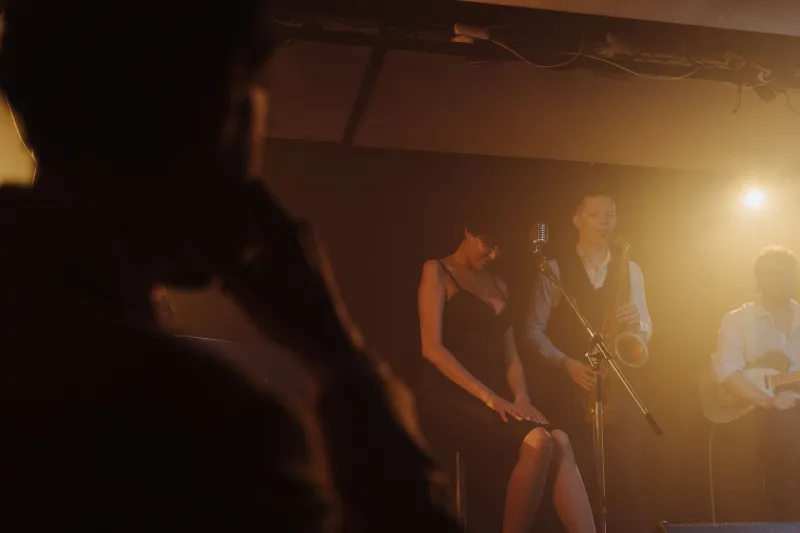
Finally, the local ingredient. In the late 80s and early 90s, East London's small venues and basement sessions were thick with jazz-funk — musicians weaned on Herbie Hancock, Roy Ayers and Lonnie Liston Smith, playing to half-full rooms with total conviction. That scene gave Taylor his rhythmic vocabulary: the floating Rhodes chords, the basslines that swing rather than thump, the drum feel that sits somewhere between a jazz quartet and a soul revue. It's the least famous influence on the list and arguably the most important, because it's the one that made the rest of it sound like London rather than Detroit or Philadelphia.
Listen Again
The joy of Taylor's music is that it rewards this kind of archaeology. Next time you press play, listen for the Stevie in the chord changes, the Donny in the dynamics, the church in the harmonies, the Funkadelic in the fuzz and Dalston in the groove. It's all in there — five records' worth of history, folded into one unmistakable voice.