Five Songs I Loved So Much I Had to Take Them Apart

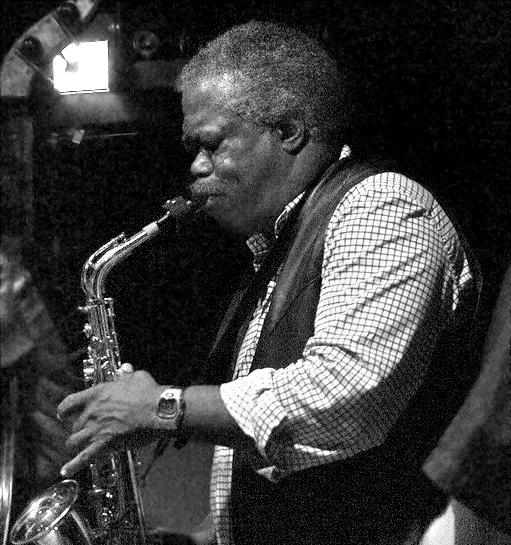
Photo: The original uploader was Goldfinger at Serbian Wikipedia., CC BY-SA 3.0 rs, via Wikimedia Commons
There's a school of thought that says a cover should honour the original. I've never subscribed to it. The covers that changed me didn't honour anything — they broke in, moved the furniture around, and left fingerprints on everything I wrote afterwards.
Here are five of them. Apologies in advance to the songwriters.
1. 'Amazing Grace' — the Hymnbook Rearrangement
Every British kid who sang in a Sunday school has this one in their bones, and I'm no exception. But the version that rewired me was a slow, almost reluctant arrangement — minor chords where the congregation expected major ones. It taught me the first lesson of interpretation: you can change the emotional weather of a song without changing a single word. When I write now, I'm always asking what happens if the sun goes behind a cloud mid-verse.
2. 'A Song for You' — Learned Off a Live Recording, Not the Record
I never properly learned this standard from the studio version. I learned it from a crackly live bootleg where the singer stretches the opening lines to breaking point. Because of that, I genuinely cannot sing it 'correctly' — my version has a wobble in it that was never written. That wobble followed me into my own ballads. Some flaws are just education wearing a disguise.
3. 'Golden' — the Soundcheck Dismantling
For about a year, my band opened soundchecks with this, stripped down to bass and a lazy hi-hat, half a tempo below the original. By month three, we weren't really playing it anymore — we were playing whatever it left behind. That's the dirty secret of covers: repeat one enough and it stops being someone else's song and becomes raw material. Half of one of my own album cuts started life as this arrangement's ghost.
4. 'Many Rivers to Cross' — the One I Shouldn't Have Attempted
There are songs you attempt at your peril, and this is mine. I sang it once, at a memorial show, and I got about halfway through before the room did the rest for me. It taught me the opposite lesson to the others: sometimes a cover is about restraint — knowing which notes to leave unsung and letting silence carry the weight. I've never recorded it. I don't think I ever will. Some songs you visit; you don't move in.
5. 'Sexual Healing' — the Late-Night Version That Stuck
The last song of many a backstage evening, played on whatever piano was in the room, at whatever tempo the hour demanded. It's a joke that stopped being a joke. Playing it taught me about groove as personality — how the same chord sequence can be a party or a confession depending entirely on where you place the beat. I hear its influence in places on my records I won't admit to publicly.
Why Bother?
Because a cover is the cheapest songwriting lesson there is. You sit inside someone else's architecture and notice what they did — and, more usefully, what you'd have done differently. Then you go home and write your own thing, and your own thing is quietly, permanently different.
That's not ruining the original. That's paying it the only compliment that counts.